
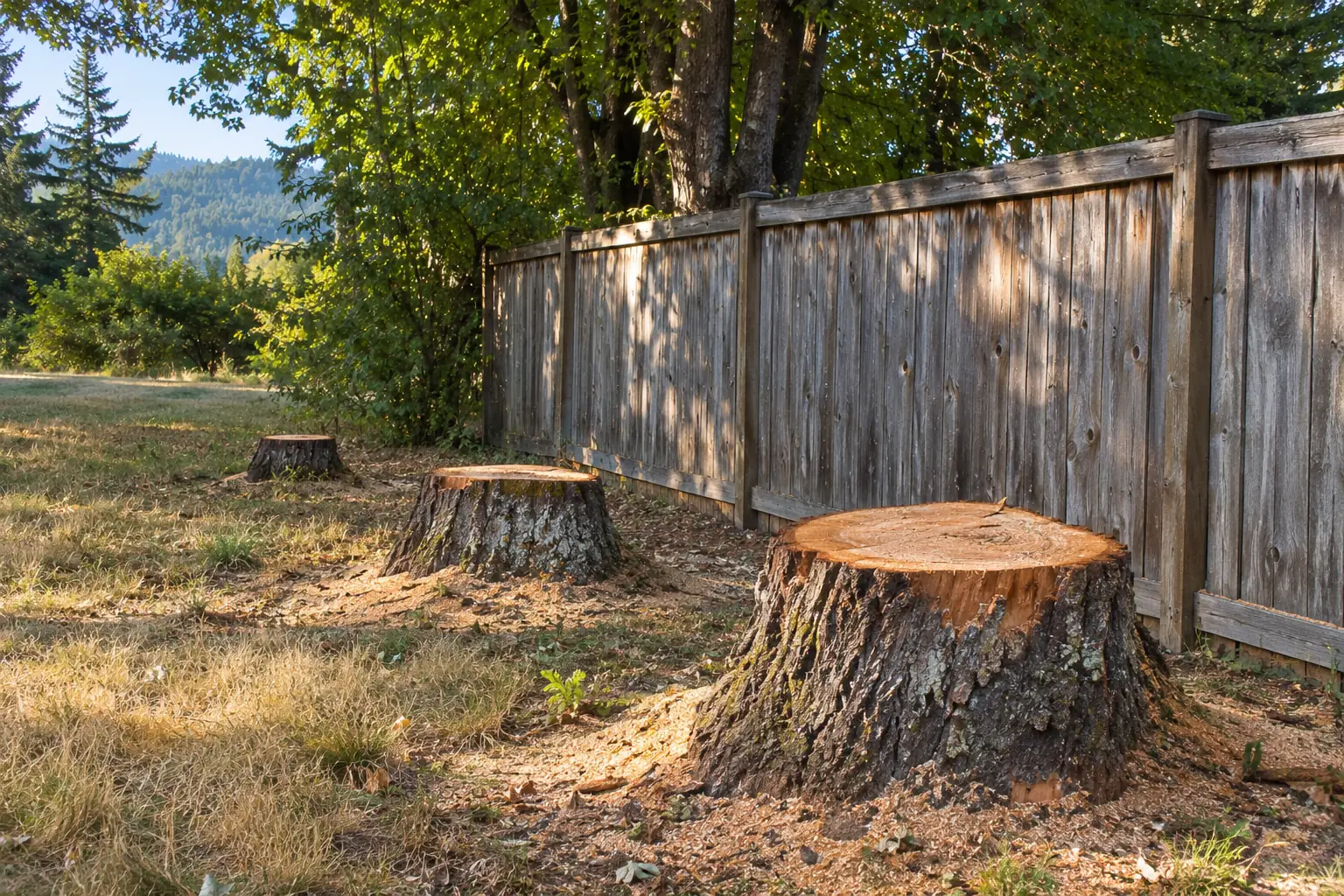
Stump grinding in Grants Pass turns an old tree stump into wood chips below the soil line so you can mow, plant or build over the spot. Call (541) 507-9679 to reach one independent Grants Pass-area tree service holding an active Oregon CCB license, and ask whether it grinds stumps. Have it look at the stump and talk through buried lines before any work starts. Pricing a stump seldom carries a fee, though only the company can say so for certain.
Stump grinding or full stump removal
Most homeowners need grinding, not full removal. The two jobs sound alike but leave very different results.
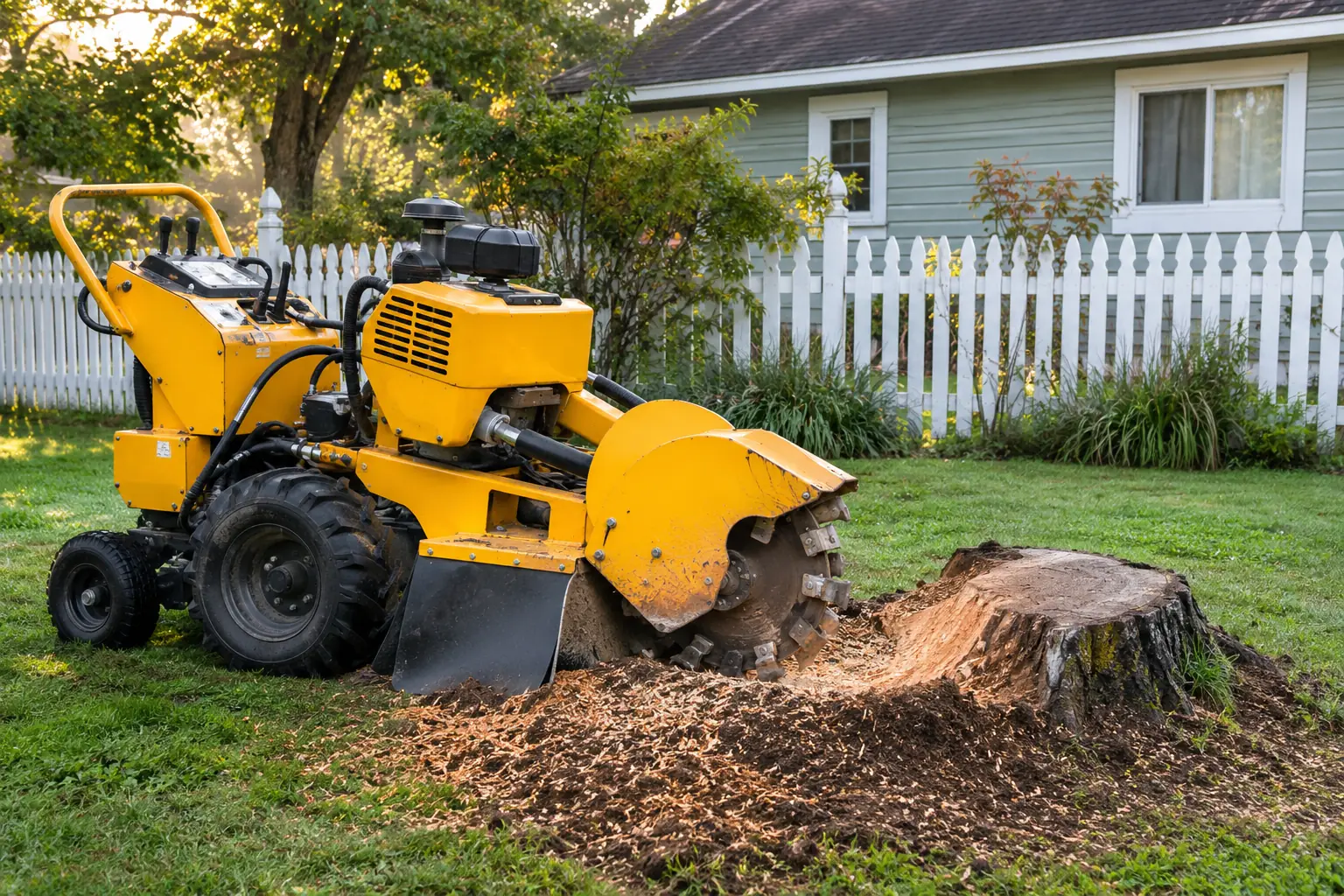
Grinding uses a machine with a toothed wheel that chews the stump down to several inches below grade. The roots stay in the ground and rot over time. The hole fills with a mix of chips and soil, which you can rake out and top with fresh soil for grass or a garden bed.
Full removal digs or pulls out the stump and the main roots. It leaves a much bigger hole and costs more, but it clears the ground for a foundation, a patio or a new tree in the exact same spot. Ask the company which one fits your plans for the space.
Either an Oregon CCB or an Oregon Landscape Contractors Board license allows a company to grind stumps, according to the LCB tree work FAQ. Ask for the license number and check it.
What stump grinding costs
Stump grinding is usually priced per stump, with the diameter, the root spread and access driving the price. Published national guides give a rough sense of the range.
LawnStarter's tree removal cost guide, updated October 5, 2026, lists stump grinding at $158 to $450 and full stump and root removal at $175 to $516. LawnLove's cost guide, updated the same day, lists stump removal at $180 to $525, priced separately from tree removal. These are national figures, not Grants Pass quotes. Several stumps in one visit may cost less per stump than a single one. The written estimate from the company that sees your stumps is what counts. The Grants Pass tree removal cost guide puts these numbers next to tree removal prices.
Stumps in the Grants Pass right-of-way
A stump in the planting strip between the curb and the sidewalk is on public right-of-way, and the City of Grants Pass treats it differently from a backyard stump. The city's tree code declares stumps on public or semi-public land a public nuisance that must be removed under city standards.
The city's tree removal or pruning permit application covers stump removal, and there is no fee. Removal work in the right-of-way has to be done by a city-prequalified contractor with International Society of Arboriculture certification, so ask whether the company you reach is on the city list. The same application says removed right-of-way trees must be replaced within four months, or by a date agreed in writing, with a tree at least 1.75 inches in caliper. If the stump is from a hazardous street tree, the city's cost-share program may cover part of the grinding. See the Hazardous Tree Program guide and the tree rules guide.
Call 8-1-1 before the grinder digs in
A stump grinder cuts below ground, so buried lines are a real risk. Water, gas, power and phone lines often run close to old trees.
Oregon's free locate service is reached by calling 8-1-1. Pacific Power asks people to call 811 at least 48 hours before planting or digging. The city's tree permit application also says it is the applicant's responsibility to call 8-1-1 for right-of-way work. Ask the tree company whether it places the locate request or expects you to. Private lines, such as a sprinkler system, a line to a well pump or a feed to a shop, are usually not marked by the locate service. Show the company where you know they run.
Planting after the stump is gone
Once the stump is ground, you can usually plant nearby, but where you plant matters for the next tree's future. Rules and guidance are different for street trees and yard trees.
For street trees, the city's permit application sets spacing rules for new trunks. They include at least 10 feet from water meters, sewer laterals, gas meters, storm inlets and hydrants, and at least 5 feet from utility poles and driveway edges. New trees must come from the city's approved list. In any yard, Pacific Power's planting guidance suggests keeping small trees under 20 feet tall at least 20 feet from poles, medium trees at least 40 feet away and large trees at least 60 feet away. Plant a little to the side of the old stump, since the ground right above it is full of chips and decaying roots.
Stump work during fire season
Stump grinders are engine-driven machines that throw chips and can make sparks if they hit rock. In fire season, that puts them under state fire rules on and near forestland.
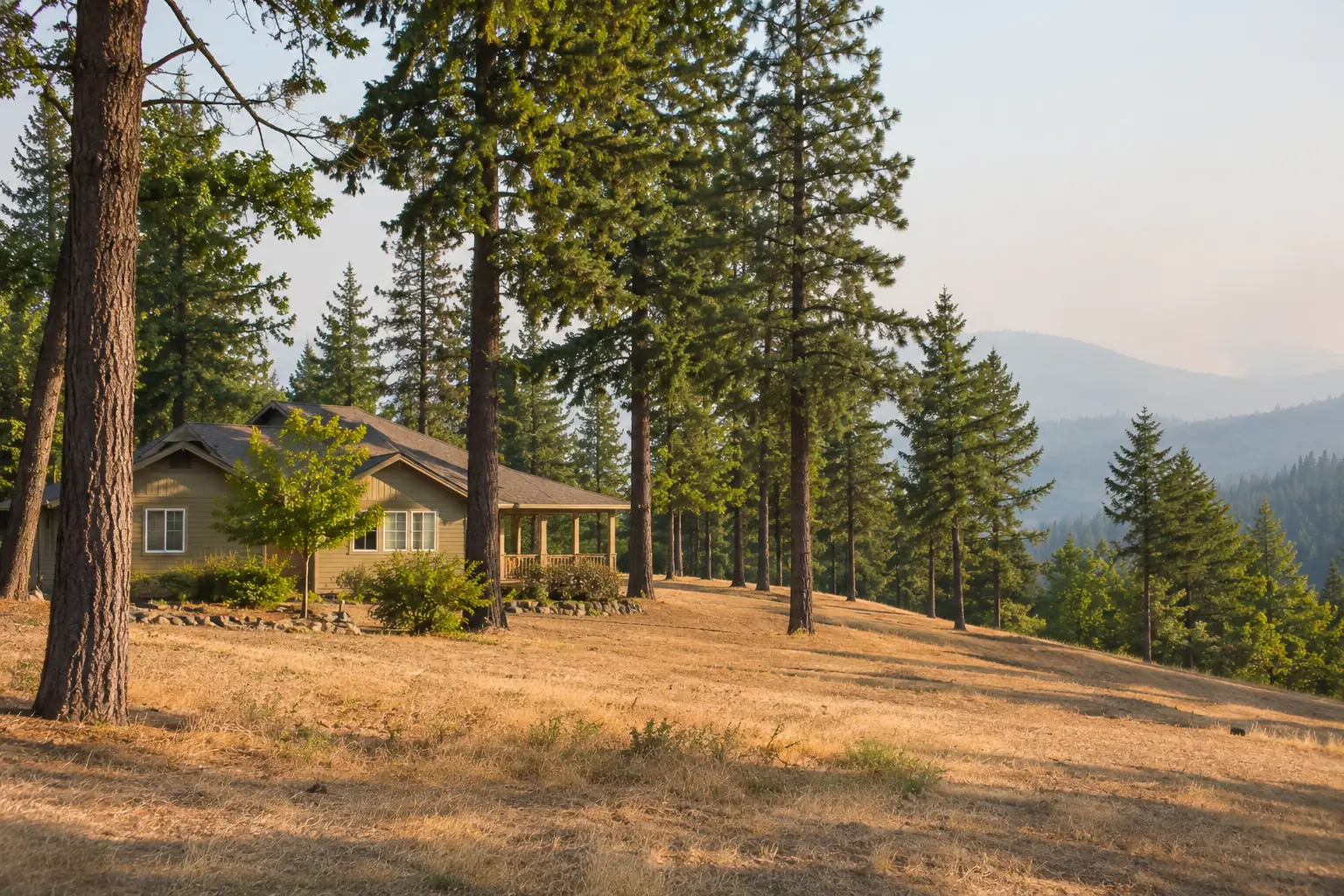
The Oregon Department of Forestry's 2026 regulated closure for southwest Oregon prohibited spark-emitting engines not otherwise listed during extreme fire danger. At lower danger levels it allowed them during set hours, in a cleared area with a charged hose or a fire extinguisher at hand. Ask the company how it handles fire season if you live on a rural lot near forestland. The wildfire tree work guide explains the fire danger levels. Chips from a dry pine stump are also fuel, so spread them thin or haul them away rather than piling them against the house.
When a stump can stay
Not every stump needs grinding, and leaving one can save money. A stump out in a pasture, at the back of a wooded lot or on a slope far from the house does little harm.
On a steep bank, the old roots may help hold soil for a few years while they rot. A cut stump can also be trimmed low and used as a base for a planter or a bench. The stumps worth grinding are the ones in a lawn you mow, in a spot you want to replant, near a foundation or walkway where people trip, or in the city planting strip, where the code requires removal. If you are unsure, ask the company to price only the stumps that are in the way.
Getting the yard ready for the grinder
A little preparation before the visit keeps the job quick and protects your property. Most of it takes only a few minutes.
- Clear rocks, toys and hoses from around the stump. Grinders can throw debris.
- Mark sprinkler heads and any private buried lines with flags.
- Measure the gate opening if the stump is in a fenced yard. Small grinders fit through narrow gates, but larger ones may not.
- Decide whether you want the chips left in the hole, spread as mulch or hauled off.
- Point out any surface roots you also want ground.
Keep children and pets indoors while the machine runs.
Stump grinding in towns near Grants Pass
The line takes stump grinding calls from Grants Pass and the nearby communities of Josephine County. Rural stumps are often larger and more numerous, especially where old firs or pines were cleared.
That includes Merlin, Murphy, Selma, Wonder and the rest of the area. If you have several stumps, count them and estimate their widths before you call so the company can give a closer price. If the tree is still standing, the large tree removal page covers taking it down first. For how the referral works, see the Grants Pass tree removal home page.
Frequently asked questions
How deep does stump grinding go?
Most grinding takes the stump several inches below the soil line, which is enough for grass or a garden bed. If you plan to build, pave or plant a new tree right in that spot, ask the company to grind deeper or remove the stump fully, and get the depth written into the estimate.
Will the roots keep sprouting after grinding?
Some trees can send up sprouts from roots left in the ground. Most conifers, such as Douglas-fir and pine, do not resprout from the stump. If you see sprouts after grinding a broadleaf tree, mow or clip them as they appear until the roots run out of stored energy.
Do I need a permit to grind a stump in Grants Pass?
A stump on public or semi-public land, such as the planting strip, needs a city tree permit and a city-prequalified contractor. A stump wholly on private land is generally outside that permit. Call the city at 541-450-6000 if you are not sure where the right-of-way ends.
Can the grinder reach a stump in my backyard?
Many companies have small grinders that fit through standard gates. Measure your gate and tell the company, along with any steps, slopes or soft ground between the street and the stump.
What do I do with the wood chips?
You can leave them in the hole, spread them as mulch away from the house or ask the company to haul them off. Fresh chips can tie up soil nitrogen for a time, so mix in topsoil if you plan to seed grass over the spot.