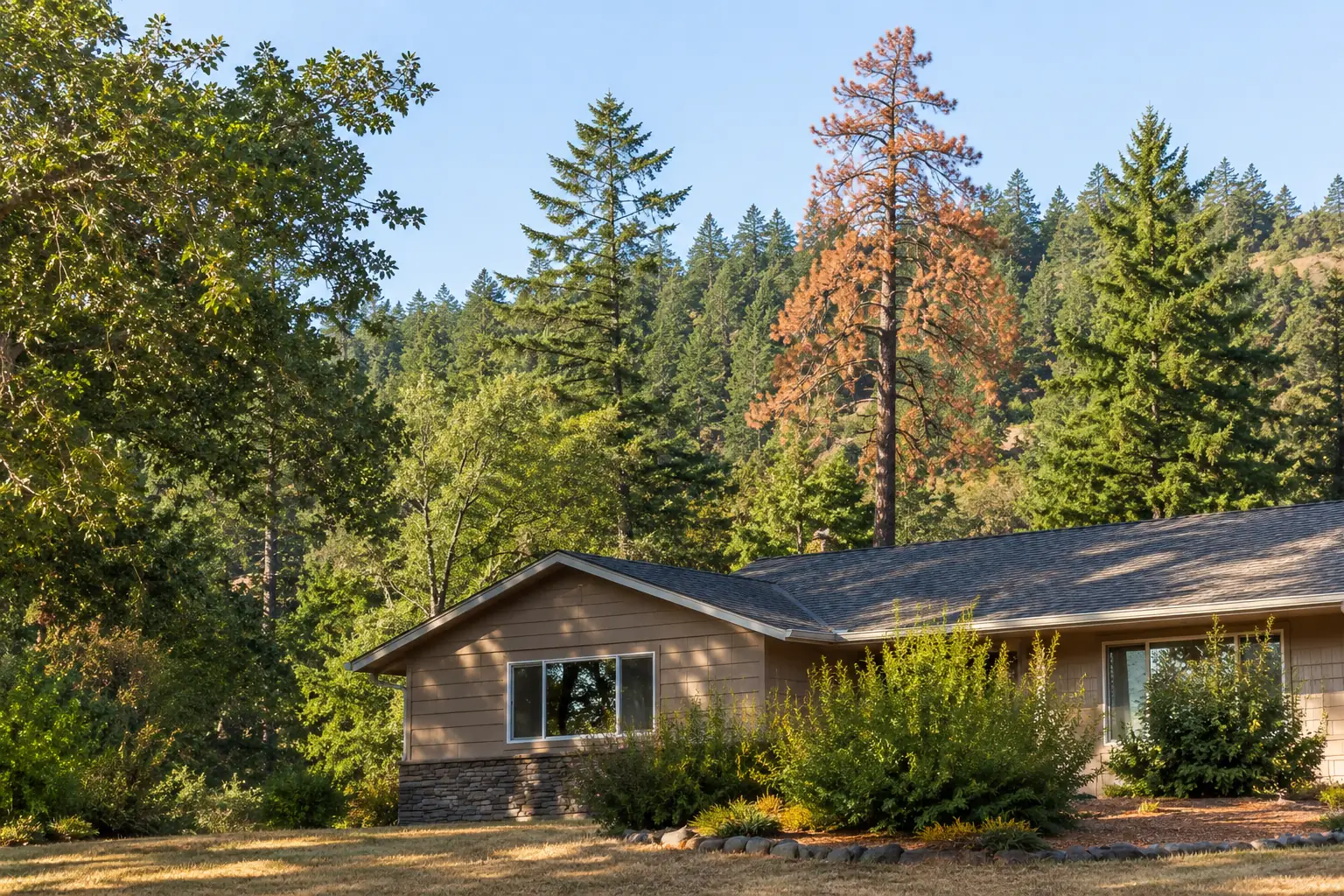
A hazard tree in Grants Pass is one that is dead, cracked, split or leaning badly enough that it could fall on a person, a house or a car. If you have one, call (541) 507-9679 to reach one independent Grants Pass-area tree service holding an active Oregon CCB license. Have it come see the tree and say what it finds. The call is free. A fee for pricing a plain takedown is rare, though only the company can rule it out.
How Grants Pass defines a hazard tree
The City of Grants Pass gives a plain definition in its tree code. Its heritage tree chapter describes a hazard tree as one that is cracked, split, leaning or damaged to the point where it is clearly likely to fall and hurt people or property, or a tree that is dead or diseased.
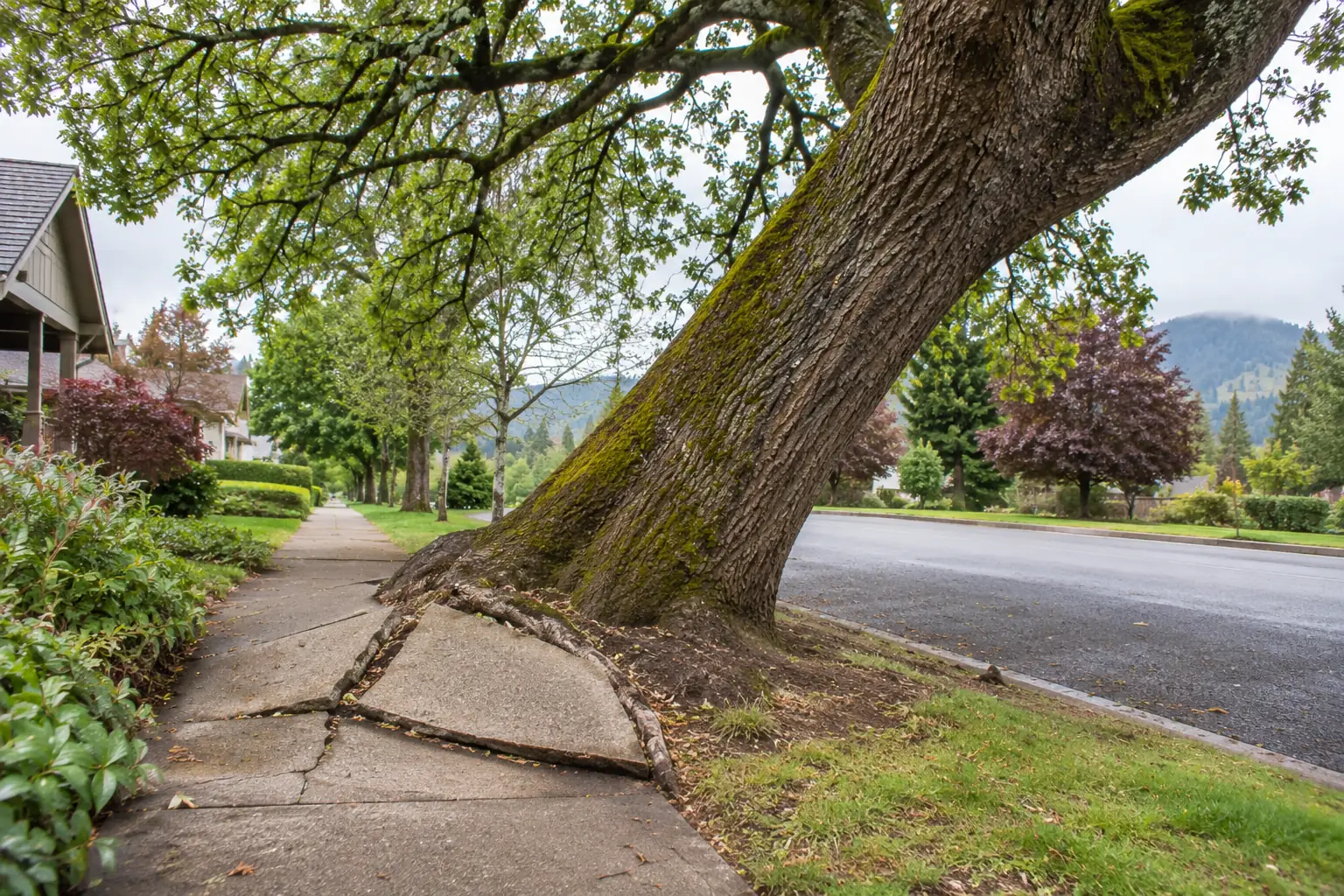
The same code is direct about who is responsible. When a tree on land the city controls, or a private tree that affects a street or sidewalk, becomes hazardous, the owner of the land where it is rooted must remove the hazard at the owner's expense. The code also says no one may keep a tree on their land that is a hazard to people or property. That is a city rule, so it applies inside city limits. Outside the city, the duty to deal with a dangerous tree is mostly a question for your insurer and, if it leans over a neighbor, a conversation with that neighbor.
Warning signs you can spot from the ground
Most hazard trees give some warning before they fail. You do not need to climb anything to see the common ones. Walk around the tree on a dry day and look at the trunk, the base and the top.
- A crack or split running down the trunk, or where two big stems meet.
- A lean that is new or getting worse, especially with soil heaved up or cracked on the far side.
- Dead branches in the upper crown, or bark falling off in sheets.
- Mushrooms or soft, crumbly wood at the base or on the roots.
- Large hanging limbs that broke in a past storm and are still caught in the crown.
- A tree that leafed out thin or not at all this spring.
None of these signs means a tree must come down. A trained eye can tell a long-standing lean from a new one, and a cosmetic dead branch from real decay. That is the point of the estimate visit. The storm damage page covers trees that were already hurt by wind or snow.
Trees that turn hazardous around Grants Pass
Some of the most common hazard trees in the Grants Pass area are Douglas-firs and pines weakened by heat and drought. Local research explains why.
Oregon State University Extension's publication Trees on the Edge, from September 2023, reports that Douglas-fir has been dying across southwest Oregon, with the worst losses on hot, dry, low-lying sites near the Rogue and Applegate valleys. It names hotter drought and the flatheaded fir borer as main drivers, and says mortality has stayed high since 2015. Signs include branch tips turning red and then gray, a dead top and small drops of pitch in the bark. Woodpecker-stripped bark, it says, means the tree is almost certain to die. A dead fir dries out and can drop limbs or snap.
Pines have their own pest. The Oregon Department of Forestry's pine engraver fact sheet says a dead or red top in the upper third of a pine crown is often the first clear sign of Ips beetles, and by then the tree is often lost. The oak and pine problems guide goes deeper on both, plus mistletoe in oaks.
Hazard trees in the city right-of-way
If the hazard tree stands in the planting strip between the curb and the sidewalk, it is in the public right-of-way, and city rules apply before any cutting starts. The Grants Pass tree permits page says a permit is needed to remove or prune a tree on public or semi-public land, including the right-of-way. There is no fee.
Removal in the right-of-way must be done by a contractor the city has prequalified, and those contractors must hold International Society of Arboriculture certification. The company you reach through (541) 507-9679 may or may not be on that city list, so ask before you book. The city also runs a cost-share program that can pay part of the bill for a hazardous right-of-way tree. It has its own steps, including three bids from approved arborists. Read the Grants Pass Hazardous Tree Program guide before you hire anyone for a street tree. The tree rules guide covers the permit itself.
Hazard trees on private land
A hazard tree that stands wholly in your own yard, away from the street, is usually yours to deal with. The city's tree permit covers public and semi-public land, and the city's own urban forestry page says its tree inventory does not include private trees.
There are exceptions to check. The city has designated a small number of Heritage Trees, and its code requires a permit to prune or remove one even on private property. The city also keeps tree standards in Article 23 of its Development Code, which matters if the lot is being built on. If you are not sure whether your tree is on private land or in the right-of-way, call the city at 541-450-6000 before work begins. Outside the city, Josephine County Public Works notes that a county road right-of-way is typically much wider than the road itself.
What happens at the estimate visit
The estimate visit is where a hazard is confirmed or ruled out. The tree company walks the site, looks at the tree from all sides and checks what is underneath it.
Expect it to look at the lean, the trunk and root flare, the crown and the targets the tree could hit if it fell, such as the house, a shed, a fence or a driveway. It will also look at how a truck and chipper can reach the tree and whether any wires run through or near the crown. The estimate should say what will be removed, whether the stump is included and what happens to the wood. If the company thinks the tree can be saved with pruning, it should say so. Ask for the estimate in writing, ask for its CCB number and check it on the Oregon CCB license search.
Hazard trees close to power lines
A hazard tree that leans toward power lines needs the utility in the loop before anyone cuts. Pacific Power tells customers to never prune or remove trees near power lines.
For trees near the neighborhood distribution lines on poles, Pacific Power says its own crews handle routine pruning and removal at no cost. For trees near the service line that runs to your house, it can arrange an arborist evaluation and a free temporary service disconnect so the work can be done safely. For that kind of planned work, its customer service number is 1-888-221-7070. A tree that has already fallen onto a line, or is leaning on one, is an emergency instead: stay 35 feet back, call 911, then Pacific Power's outage number, 1-877-508-5088. The emergency tree removal page has the rest.
Hazard trees on rural lots around Grants Pass
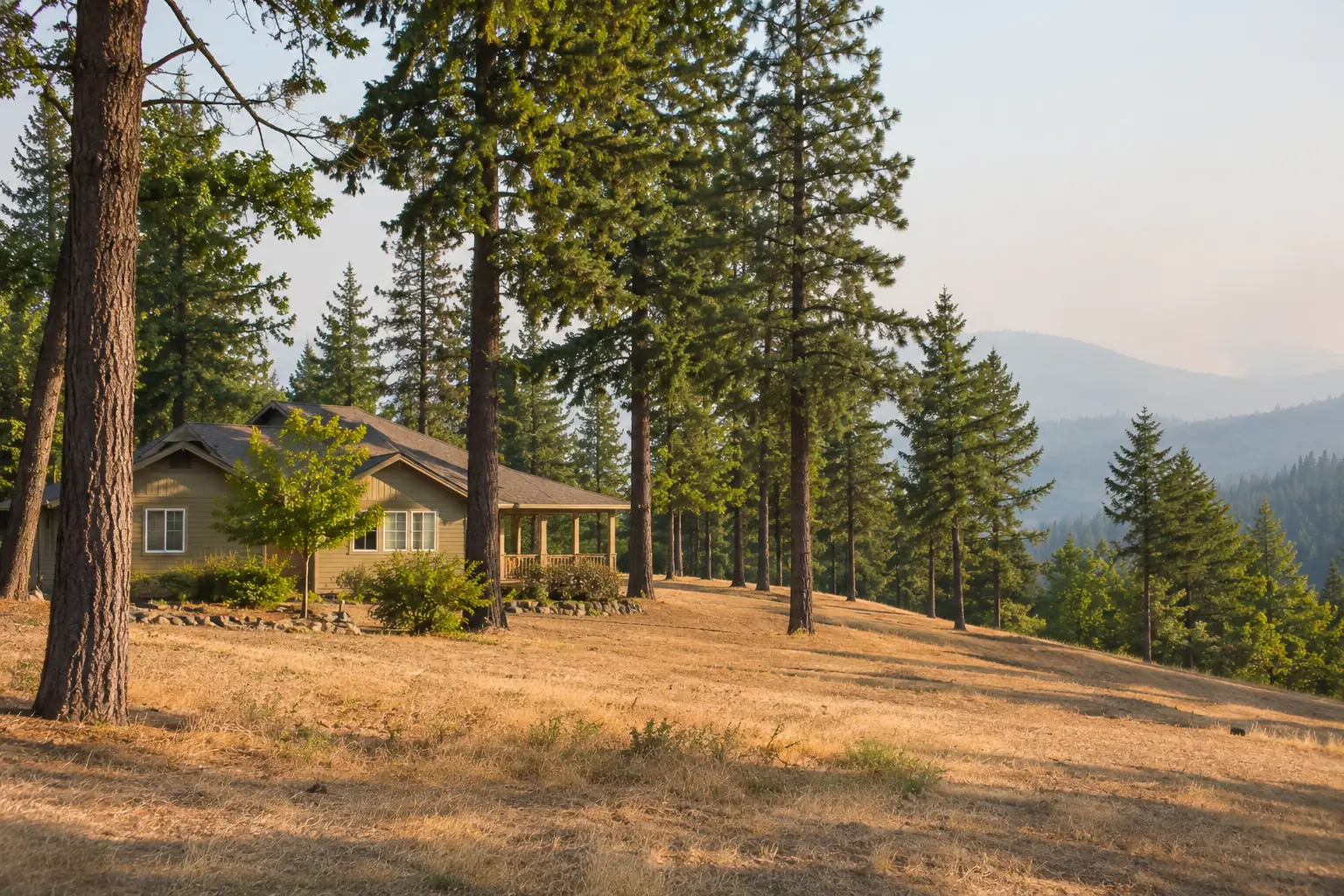
Rural lots around Grants Pass often have more trees to check and fewer neighbors to notice when one starts to die. Dead firs and pines near a house are both a fall risk and a fire risk.
On acreage near Merlin, Williams or Wilderville, it helps to walk the trees within striking distance of the house, the driveway and the power drop once a year, ideally in late spring when dead crowns stand out. OSU's Trees on the Edge notes that removing dead trees lowers both the fall hazard and the future fuel load. If you are clearing trees partly for fire safety, read the Josephine County wildfire tree work guide first, since fire season rules can affect when saws may run.
To see how the referral works from start to finish, go back to the Grants Pass tree removal home page.
Frequently asked questions
How do I know if my tree is a hazard or just looks bad?
A tree that looks rough is not always dangerous. Cracks in the trunk, a new or growing lean, decay at the base and dead wood over a house or driveway are the signs that matter most. Ask the tree company to look at all of them and tell you what it sees before it gives a price.
Who pays to remove a hazard tree in the Grants Pass right-of-way?
Under the city code, the owner of the land where the tree is rooted is responsible for removing the hazard. The city's Hazardous Tree Program may pay up to half the cost of removal, stump grinding and replacement for a qualifying right-of-way tree, when funds are available and its steps are followed.
Do I need a permit to remove a dead tree in my backyard?
A tree fully on private land in Grants Pass is generally outside the city's tree permit, which covers public and semi-public land. Heritage Trees and trees on development sites have their own rules. Call the city at 541-450-6000 if you are unsure. Outside city limits, check with Josephine County.
Can a hazard tree be saved instead of removed?
Many can. A tree with one bad limb may only need that limb taken off, and a lean that has been stable for decades may not be a new risk. A tree with a dead top from beetles or advanced decay at the base usually cannot be saved. Ask the company to explain both options in the estimate.
What if my neighbor's dead tree leans over my house?
Talk with your neighbor first and share what you have seen. Rules on who pays and who may cut vary, and insurance often plays a part. Confirm with your insurer, and inside city limits with the city, before anyone cuts a tree that is not on your land.