Around Grants Pass, most declining conifers are Douglas-firs and pines stressed by hotter droughts and then attacked by insects such as the flatheaded fir borer and Ips bark beetles. Oaks more often carry mistletoe, which is usually mild. If a tree near your home is dying, call (541) 507-9679 to reach one CCB-licensed tree company and ask it to take a look. The call is free, and the company can say whether its visit is.
Heat, drought and the pests that follow
The main reason so many trees are failing around Grants Pass is water stress, and insects finish off trees that drought has weakened. Oregon State University Extension describes this as a decline spiral.
OSU Extension's Trees on the Edge, published September 2023, lays it out in three layers. Dry, marginal sites set trees up to struggle. Hotter droughts, where high temperatures add to the moisture stress of dry years, push them further. Insects and canker fungi then attack trees that can no longer defend themselves. The publication also points out that decades of fire exclusion let Douglas-fir spread onto valley floors and low ground that were once pine or oak woodland. Those are often the driest sites, and the firs growing there are the ones dying now.
Douglas-fir decline in the Grants Pass area
Douglas-fir is the tree most often in trouble on lower ground around Grants Pass. Trees on the Edge reports that the decline is worst on hot, dry sites on low and middle ground near the Rogue, Applegate and Umpqua valleys, especially sites under 35 inches of yearly rain and below 3,500 feet.
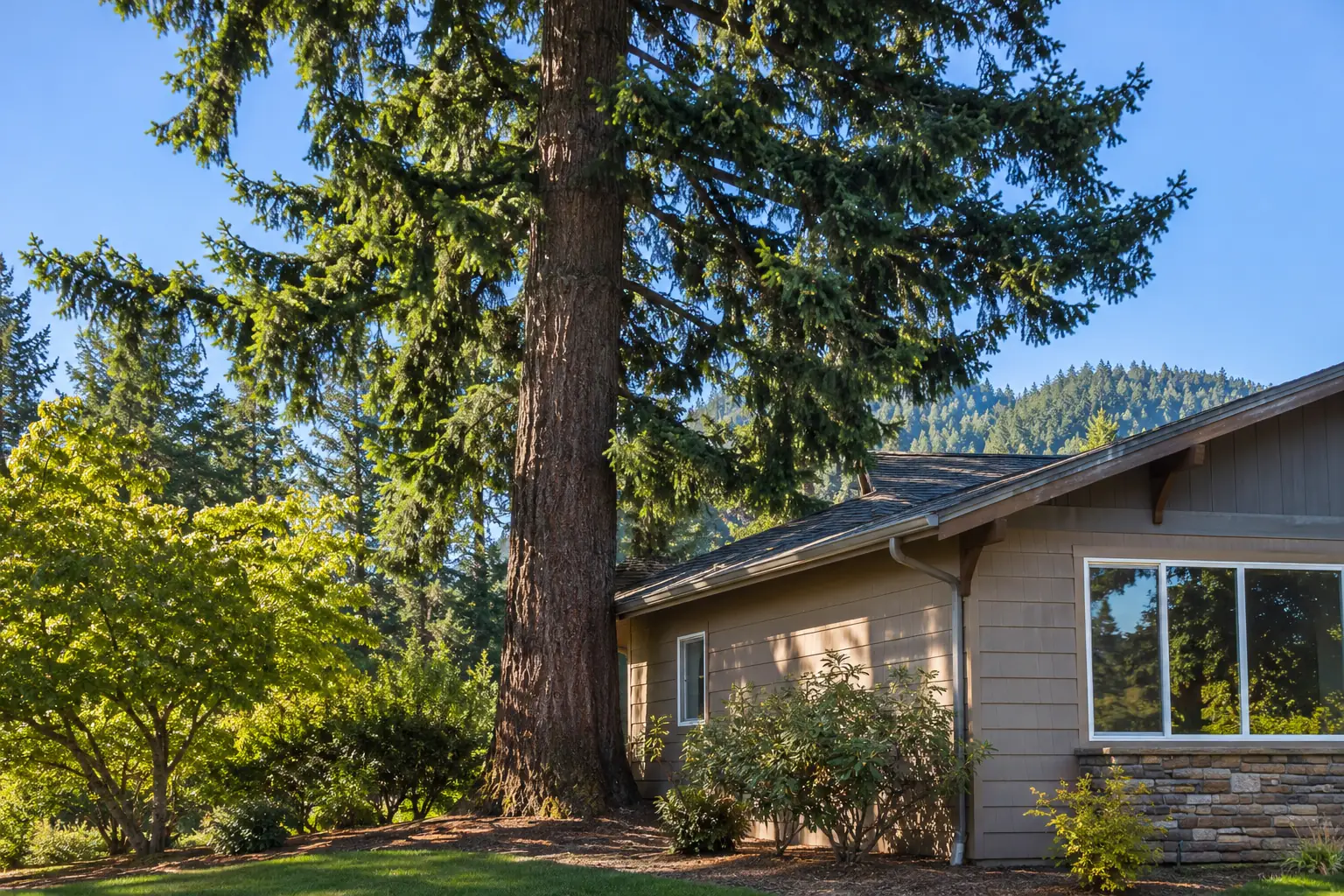
The numbers have been large. The publication says Douglas-fir mortality used to rise for a year or two during drought and then drop, but it has stayed high since 2015. It reports that roughly 260,000 trees died and nearly 150,000 acres were affected from 2016 to 2019. It names the flatheaded fir borer as the most important insect involved. Higher-risk spots include steep south- and west-facing slopes, upper slopes, shallow clay soils near oak woodlands and the edges of stands.
Signs a Douglas-fir is declining
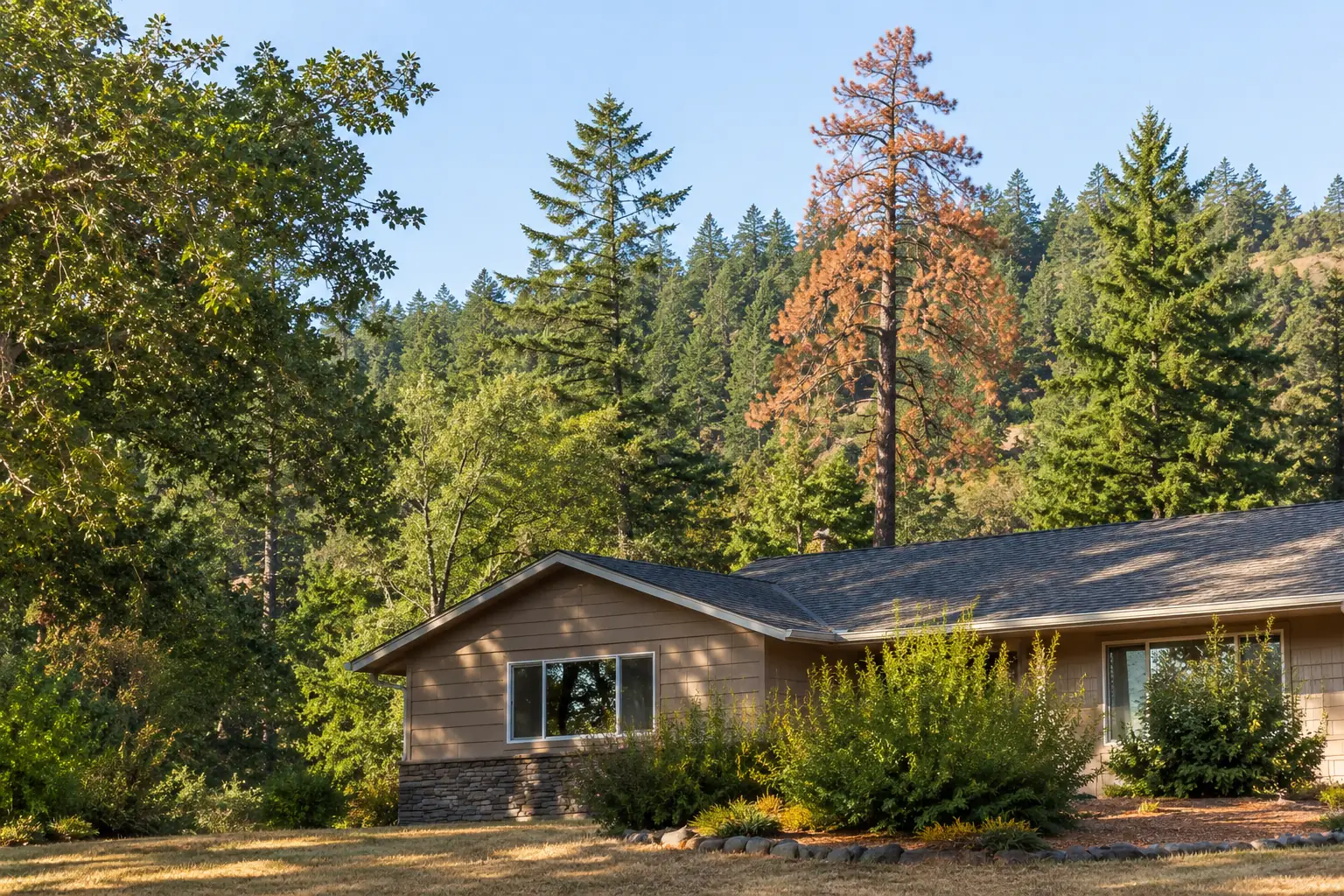
The publication lists symptoms you can see from the ground:
- Branch tips or whole branches turning red, then gray as the needles drop.
- A dead top.
- A thin crown, yellowing needles and a heavy crop of small cones.
- Small drops of pitch in the bark cracks, which can mean fir borer attack.
- Bark stripped by woodpeckers, which it says means the tree is almost certain to die.
Ips beetles and other pine bark beetles
Stressed pines around Grants Pass are often killed by bark beetles, and Ips beetles are among the ones to know. The Oregon Department of Forestry's pine engraver fact sheet, from April 2021, explains how they work.
Ips beetles breed first in fresh pine slash and then move to standing trees. They attack sapling and pole-sized pines and the tops and branches of bigger ones. A dead top in the upper third of the crown is often the first clear sign, and by the time the top of a large tree turns red, the sheet says the tree is often lost. Early signs include orange-tan boring dust in the bark cracks and small pitch tubes, though drought-stressed trees may not have enough sap to make them. Under the bark, galleries form an X or Y pattern. The sheet says outbreaks usually follow springs when rainfall from April through July is 25% below normal, and that overcrowded young pine stands are most at risk. Other beetles work different parts of the tree. The western pine beetle attacks the main trunk of ponderosa pine, and the red turpentine beetle colonizes the lower trunk and root collar.
ODF's advice is to keep pines from getting crowded and to manage slash. Fresh pine pieces 3 to 8 inches across should not be left near live pines from January through September. The wildfire tree work guide covers the timing in more detail.
Dwarf mistletoe in ponderosa pine
Dwarf mistletoe is a different plant from the leafy mistletoe in oaks, and it does more harm. OSU Extension's mistletoe publication, from November 2021, says its main hosts include ponderosa pine and true firs.
Dwarf mistletoe can cause growth loss, deformed limbs, topkill and death, and it makes trees more likely to be hit by bark beetles. Signs include clusters of twisted branches called brooms, swelling on branches or the trunk and cankers. Because each kind of dwarf mistletoe infects one host species or close relatives, the publication suggests removing understory trees of the same species within 50 feet of an infected overstory tree and favoring other species. On a home lot, a heavily broomed pine near the house is worth having looked at.
Mistletoe in Grants Pass oaks
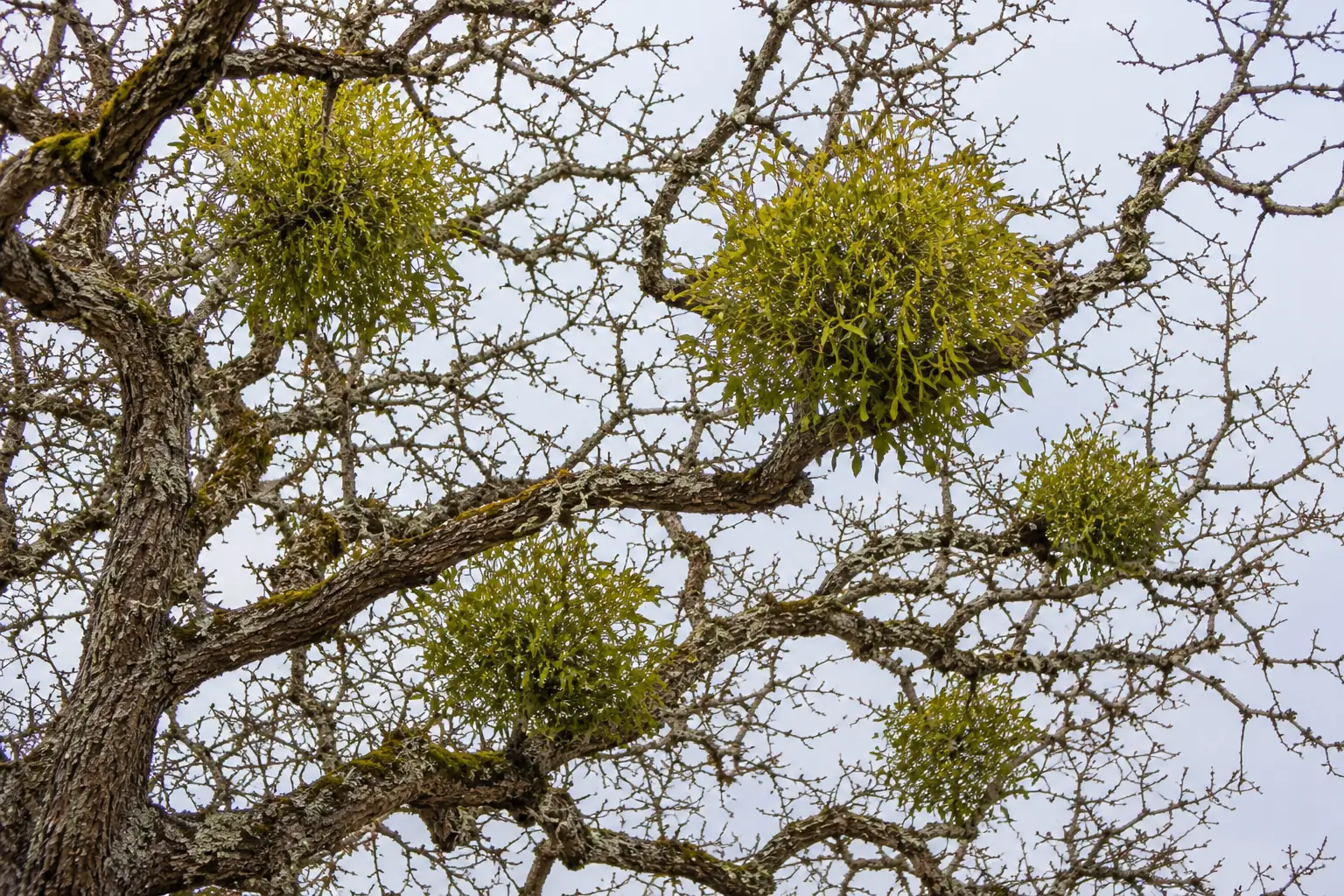
The leafy green clumps of mistletoe seen in Oregon white oaks are true mistletoe. It looks dramatic but usually does limited harm. OSU Extension says true mistletoe makes much of its own food, so it is less damaging than dwarf mistletoe.
The same OSU publication says heavy infections can cause growth loss, branch dieback and drought stress, and that treatment is generally not recommended. Pruning out the mistletoe gives a few years of relief but must be repeated. The Pacific Northwest plant disease handbook's oak mistletoe entry, revised March 2026, adds that birds spread the seeds and that heavily loaded branches can break in storms. It notes that removing heavy infections has been suggested to help oaks in southern Oregon cope with drought, but no replicated trials support that yet. A heavily infected oak limb over a roof or driveway is a pruning question first, not always a removal.
Can a declining tree be saved
Some declining trees can be helped, but many cannot, and the difference is how far the decline has gone. OSU's Trees on the Edge is direct about this.
It says that once a tree is infested or has severe crown decline, it cannot be saved. For healthier landscape trees, care such as deep watering, mulching and avoiding damage to roots can help. It also says that acting before trees die gives owners more options at lower cost. In practice, that means watching your firs and pines each spring and calling for an estimate when tops or branches start to fade, rather than waiting until a dead tree threatens the house. The hazard tree removal page explains what a tree company looks for.
What to plant instead
On the dry sites where firs are dying, the next tree should be one that tolerates heat and drought. OSU's publication suggests favoring drought-tolerant species such as pines, oaks and madrones on high-risk sites.
For street trees in Grants Pass, the city has its own approved list. The examples printed in the city's tree permit application include ponderosa pine, described as native to southern Oregon, and several drought-tolerant oaks, such as chinkapin oak and swamp white oak. Replacement street trees must be at least 1.75 inches in caliper. The Grants Pass tree rules guide covers street tree planting rules.
Getting a diagnosis
When you are not sure what is wrong with a tree, a diagnosis is the first step. Free and low-cost help is available locally.
The City of Grants Pass urban forestry page points residents to OSU Extension for horticulture and forestry questions on private property. The Josephine County Master Gardeners run a plant clinic that is open to the public. If the tree is large, dead or near the house, a tree company can look at it at the same time it gives you a removal estimate. Owners on acreage near Wilderville, Provolt or Williams can see the large tree removal page for how big firs and pines come down. For how this referral service works, see the Grants Pass tree removal home page.
Frequently asked questions
Why are so many Douglas-firs dying around Grants Pass?
OSU Extension links it to hotter droughts on dry, low-lying sites, plus the flatheaded fir borer and other insects that attack stressed trees. Mortality in southwest Oregon has stayed high since 2015, with the worst losses on hot, dry slopes near the Rogue and Applegate valleys.
My pine has a red top. Is it dying?
A red or dead top in the upper third of a pine is often the first clear sign of Ips beetles, according to ODF. By then the tree is often lost. Have it looked at, and remove infested trees quickly so beetles do not spread to nearby pines.
Does mistletoe kill oak trees?
The leafy mistletoe in Oregon white oaks rarely kills a tree outright. OSU Extension says heavy infections can cause branch dieback and drought stress, and heavily loaded limbs can break in storms. Pruning gives a few years of relief but has to be repeated.
Can I save a fir that is turning brown?
OSU Extension says a tree that is already infested or has severe crown decline cannot be saved. A tree with only light stress may respond to deep watering, mulch and protection from root damage. A tree company or the OSU Extension plant clinic can help you judge which case you have.
What should I plant where a fir died?
On hot, dry sites, OSU Extension suggests drought-tolerant species such as pines, oaks and madrones. For a street tree in Grants Pass, choose from the city's approved street tree list and get a planting permit first.